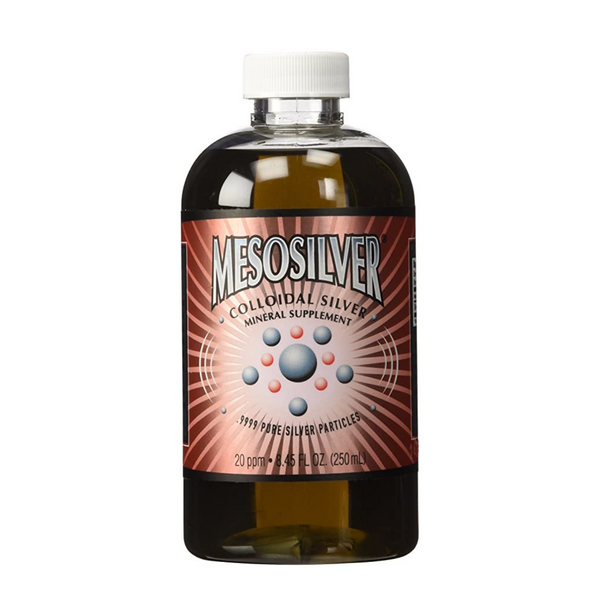
Half of all women will get a urinary tract infection in their lifetime, and most of them will spend the first few hours Googling instead of calling a doctor. If one of those searches brought you here, this is the answer you were actually looking for: what silver does to the bacteria behind UTIs, which parts of that are proven in a lab versus proven in a person, and how to use MesoSilver for urinary and immune support without doing anything dumb.
First, what a UTI actually is
A UTI is bacteria where bacteria don't belong. Most start when gut flora — usually Escherichia coli — migrate from the perineum into the urethra and climb into the bladder. Left alone, they can keep climbing: ureters, then kidneys, which is when a nuisance becomes a medical problem.
Two things about UPEC matter for the rest of this article. It is very good at attaching to bladder cells, and it builds biofilms — a slimy, structured colony that antibiotics have trouble penetrating. Biofilm is why recurrent UTIs recur, and it is exactly the thing silver research keeps targeting.
What silver does to the bacteria behind UTIs
Silver's antimicrobial action isn't folklore; it's the reason hospitals coat catheters and wound dressings with it. The mechanism has been characterized repeatedly: silver nanoparticles and the ions they release bind to bacterial cell membranes and proteins, disrupt the membrane, interfere with respiration and DNA replication, and generate oxidative stress inside the cell. Gram-negative organisms like E. coli are particularly susceptible because of their thin cell wall.[2]
Here's the study that matters most for UTIs specifically — because it used the actual uropathogen, not a lab strain.
Rodríguez-Serrano et al., PLoS ONE, 2020. Silver nanoparticles tested against uropathogenic E. coli. At a sub-inhibitory concentration of just 7.5 mg/L (7.5 ppm), the nanoparticles inhibited biofilm formation by ~97% and broke up ~80% of already-established biofilm. The authors proposed silver nanoparticles as a candidate for preventing UPEC infection.[3]
That concentration is worth sitting with. 7.5 ppm is less than half the concentration of a bottle of MesoSilver. It does not mean a tablespoon reaches your bladder at 7.5 ppm — ingested silver is diluted, absorbed, distributed and excreted — but it does mean the effective range in the lab is not some exotic pharmaceutical dose. It is the range colloidal silver has always been made in.
Multiple other groups have shown the same pattern against UPEC: reduced adherence to cells, reduced biofilm, and activity against antibiotic-resistant strains.[4] The consistency across labs is the point.
And in actual humans?
Here is where most colloidal silver sites either go quiet or start making things up. We'll do neither.
Lam et al., Cochrane Database of Systematic Reviews, 2014. A review of 26 trials and over 12,000 hospitalized adults comparing catheter types. Silver-alloy catheters reduced bacteriuria — bacteria in the urine — by about 18% (RR 0.82, 95% CI 0.73–0.92). But in the single largest, best-designed trial, they did not reduce symptomatic catheter-associated UTI (RR 0.99).[5]
Read that honestly and it says two true things at once. Silver, sitting in contact with urine inside a human urinary tract, measurably suppresses bacterial growth. And suppressing bacterial counts is not the same thing as curing an infection that has already taken hold. That's the whole story of colloidal silver and UTIs in one Cochrane review.
How people use MesoSilver for urinary and immune support
So what is MesoSilver for, in this context? The same thing the research supports: giving your immune system a mineral with well-characterized antimicrobial activity, at the first sign something's off, while you do the things that actually move the needle on UTIs — hydration, not holding it, and getting seen if it escalates.
Three things make MesoSilver different from the colloidal silver that gets cited in cautionary tales:
It is 20 ppm, which is the concentration the evidence lives in — not 500 ppm. Higher is not better with silver; higher is how people end up in case reports. We wrote a full guide on why.
It is true colloidal silver — silver particles, not silver ions. Purest Colloids publishes its own lab characterization showing sub-nanometer mean particle size and the highest particle surface area of any colloidal silver it has tested, which is what drives contact with bacterial membranes. Ionic "silver water" products chemically convert to silver chloride the moment they hit your stomach acid.
The maintenance serving sits under the EPA's lifetime reference dose. This is the number nobody else will show you, so here it is.
| Serving | Silver delivered | vs. EPA reference dose* |
|---|---|---|
| 1 tablespoon (15 mL) daily — maintenance | 0.30 mg | 86% of daily RfD |
| 1 tablespoon up to 4× daily — short-term, "when needed" | up to 1.2 mg | Above RfD — label says short-term for a reason |
*EPA IRIS oral reference dose for silver: 0.005 mg/kg/day, set to prevent argyria (permanent skin discoloration) over a lifetime of daily exposure. For a 70 kg (154 lb) adult that's 0.35 mg/day.[6] Argyria case reports overwhelmingly involve homemade or very high-ppm products taken for months or years.
That's the honest frame: the daily serving is designed to be taken daily, and the higher protocol is for the few days you need it, not a lifestyle. Take it on an empty stomach, 15 minutes before food, and drink water like it's your job — because with a UTI, it is.

The stack that actually reduces UTIs
If you get recurrent UTIs, silver is one tool. Here is what the rest of the evidence-based toolkit looks like, so you're not relying on any single thing.
Cranberry — but the real kind. The 2023 Cochrane review (50 trials, 8,857 people) found cranberry products cut symptomatic UTIs in women with recurrent infections by about 26% (RR 0.74).[7] That's capsules or concentrate standardized for proanthocyanidins, not the juice cocktail that's mostly sugar.
Water, and then more water. Dilution and frequent voiding are mechanical — they physically flush bacteria before they can attach. There's a reason every urologist starts here.
Don't hold it, and void after sex. Both reduce the time bacteria have to ascend. Unsexy, effective.
Keep the gut in order. UPEC comes from your own gut flora. A diet that doesn't wreck your microbiome does more for recurrence than any bottle.
Frequently asked questions
Can I take colloidal silver for a UTI?
You can take MesoSilver for urinary and immune support, and many customers do at the first sign of symptoms. Silver nanoparticles have well-documented activity against the E. coli behind most UTIs in laboratory studies. There are no clinical trials of oral colloidal silver treating a diagnosed UTI, so it should not replace medical care — especially with fever, back pain, blood in urine, or during pregnancy.
How much MesoSilver should I take for urinary support?
The label serving is one tablespoon (15 mL) daily on an empty stomach, which delivers 0.3 mg of silver — under the EPA's lifetime reference dose for an adult. The label allows up to one tablespoon four times daily short-term "when needed." Drink plenty of water either way.
Does colloidal silver kill E. coli?
In laboratory studies, yes. Silver nanoparticles disrupt E. coli membranes and metabolism, and at concentrations below 10 ppm inhibited uropathogenic E. coli biofilm formation by ~97% in one 2020 study. Lab results don't automatically translate to what happens in a person, which is why we describe MesoSilver as support rather than treatment.
Is colloidal silver safe to take daily?
At 20 ppm and one tablespoon per day, MesoSilver delivers less silver than the EPA's lifetime daily reference dose. The risk people worry about — argyria, a permanent blue-gray skin discoloration — comes from homemade or very high-concentration products taken for long periods. Use the short-term higher protocol as the label describes: short-term.
Can I use colloidal silver instead of antibiotics for a UTI?
No. An established bacterial UTI, particularly one with fever or back pain, can progress to a kidney infection and sepsis. See a clinician and get a urine culture. MesoSilver is a supplement that supports your body's defenses; it is not a drug and is not studied as one for this purpose.
What's the difference between colloidal silver and ionic silver for this?
Colloidal silver is metallic silver particles suspended in water; ionic silver is dissolved silver ions. Ions react with chloride in stomach acid and form silver chloride, which is biologically inert. Particles don't. MesoSilver is particle-based, which is what the nanoparticle research above was actually testing.
- Mann R, Mediati DG, Duggin IG, Harry EJ, Bottomley AL. Metabolic adaptations of uropathogenic E. coli in the urinary tract. Front Cell Infect Microbiol. 2017;7:241 — citing Foxman 2002/2003 and Brumbaugh 2013 for lifetime risk, and Foxman 2002/2003, Martinez & Hultgren 2002 and Kucheria 2005 for UPEC share. Full text
- Yin IX, Zhang J, Zhao IS, Mei ML, Li Q, Chu CH. The antibacterial mechanism of silver nanoparticles and its application in dentistry. Int J Nanomedicine. 2020;15:2555–2562. Full text
- Rodríguez-Serrano C, Guzmán-Moreno J, Ángeles-Chávez C, et al. Biosynthesis of silver nanoparticles by Fusarium scirpi and its potential as antimicrobial agent against uropathogenic Escherichia coli biofilms. PLoS ONE. 2020;15(3):e0230275. doi:10.1371/journal.pone.0230275
- Chitosan-coated silver nanoparticles inhibit adherence and biofilm formation of uropathogenic E. coli. ACS Infect Dis. 2023. ACS
- Lam TBL, Omar MI, Fisher E, Gillies K, MacLennan S. Types of indwelling urethral catheters for short-term catheterisation in hospitalised adults. Cochrane Database Syst Rev. 2014;(9):CD004013. doi:10.1002/14651858.CD004013.pub4
- U.S. EPA Integrated Risk Information System. Silver (CASRN 7440-22-4): oral RfD 5×10⁻³ mg/kg-day, critical effect argyria. IRIS summary
- Williams G, Stothart CI, Hahn D, et al. Cranberries for preventing urinary tract infections. Cochrane Database Syst Rev. 2023;(11):CD001321. Cochrane summary
These statements have not been evaluated by the Food and Drug Administration. This product is not intended to diagnose, treat, cure, or prevent any disease. This article is educational and is not medical advice; consult a qualified healthcare provider about urinary symptoms.